
The Quiet Skill of Noticing
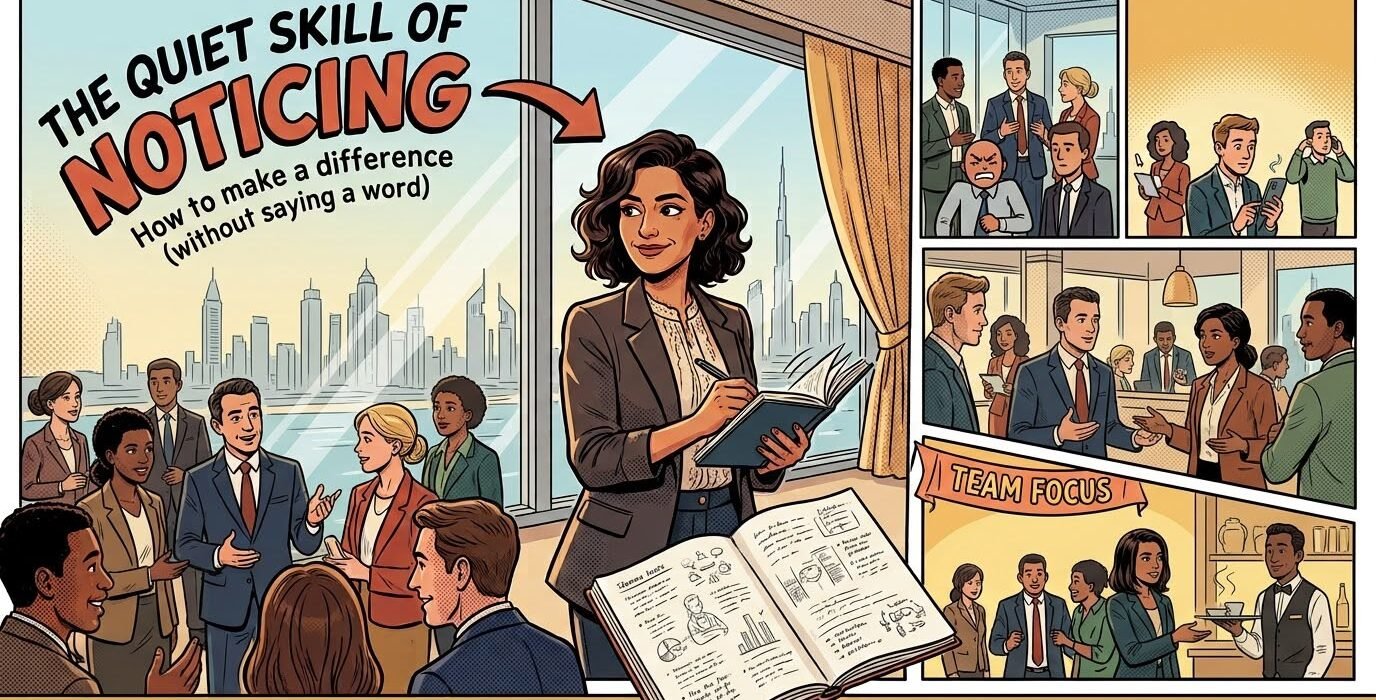
Some people walk into a room and immediately notice the décor. Others notice the music, the food, or how crowded it is.
I’ve always noticed people.
Not because I try to, but because it happens naturally. I find myself paying attention to the little things most people overlook—a pause before someone answers, a smile that doesn’t quite reach their eyes, the colleague who’s unusually quiet, or the friend who insists they’re “fine” a little too quickly.
Sometimes I even catch myself wondering: Are they enjoying this conversation? Are they comfortable? Should I stop talking?
I’ve often wondered if this is a skill you’re born with or something you learn along the way. I don’t have the answer, but I do believe life teaches us to pay closer attention.
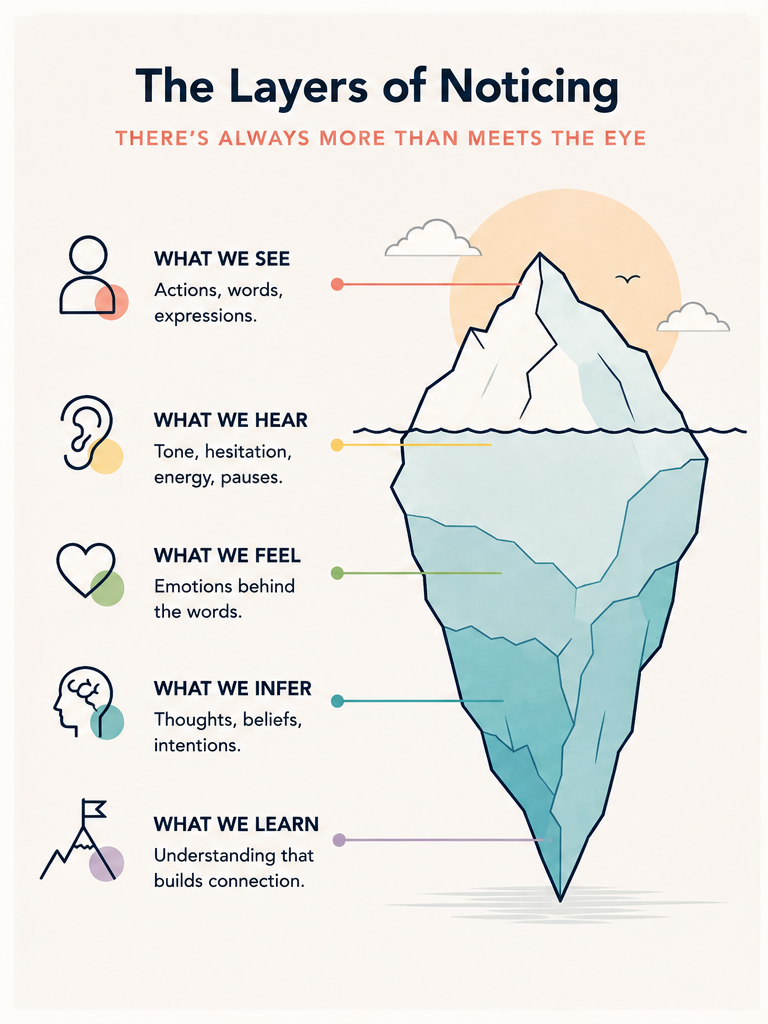
People don’t always express what they’re feeling with words. Sometimes they communicate through silence, body language, the way they carry themselves, or even through what they choose not to say.
I’ve learned that listening isn’t just about hearing someone’s words. It’s about noticing everything around those words.
One thing I’ve realised about myself is that I naturally adapt to people’s energy. If someone is genuinely interested, I’ll happily keep talking. If I sense they’re distracted, I usually wrap up my story without them ever asking me to.
Sometimes it’s a glance around the room, someone checking their phone, or simply a change in body language. I don’t take it personally. I just adjust.
What’s fascinating is that this doesn’t only happen face-to-face. Sometimes I can sense it through a phone call or even a message.
One of my clients, Aya, unknowingly reminds me of this all the time. After years of emails, WhatsApp messages, and phone calls, I’ve started recognising small shifts in her communication.
If her messages suddenly become shorter, I can usually sense she’s under pressure, so I keep my replies concise and focus on solutions. If she sounds relaxed, there’s room for a proper conversation. If I sense frustration, I try to understand what’s behind the words before rushing to explain myself.
None of this comes from seeing her facial expressions. It’s simply years of paying attention.
Working with people from different cultures has also taught me that emotions often need no translation. Excitement, disappointment, nervousness, relief, and gratitude somehow look familiar everywhere.
The same is true within a team. One person becomes quieter when they’re overwhelmed. Another makes jokes under pressure. Someone else becomes unusually focused when they’re worried about getting everything right.
None of these reactions are right or wrong. They’re simply different ways people cope. The more we notice these differences, the easier it becomes to understand when someone needs support, encouragement, or simply some space.
Of course, noticing isn’t the same as knowing.
A tired face doesn’t always mean sadness. Silence doesn’t always mean something is wrong. A short email doesn’t always mean frustration.
Paying attention doesn’t give us all the answers, but it allows us to ask better questions:
Are you okay? Can I help? Would you like to talk?
Sometimes those simple questions matter more than having the perfect answer.
This way of seeing the world has quietly followed me into my career.
Working in events is often associated with logistics, timelines, and flawless execution. Those things matter, but I’ve come to believe that our real job is understanding people.
Behind every request is an expectation. Behind every last-minute change is usually a reason that isn’t written in the email. And the details that make an event memorable aren’t always the biggest ones.
Remembering a preference. Noticing when a client needs reassurance. Knowing when a teammate needs encouragement rather than another task. Making someone feel seen.
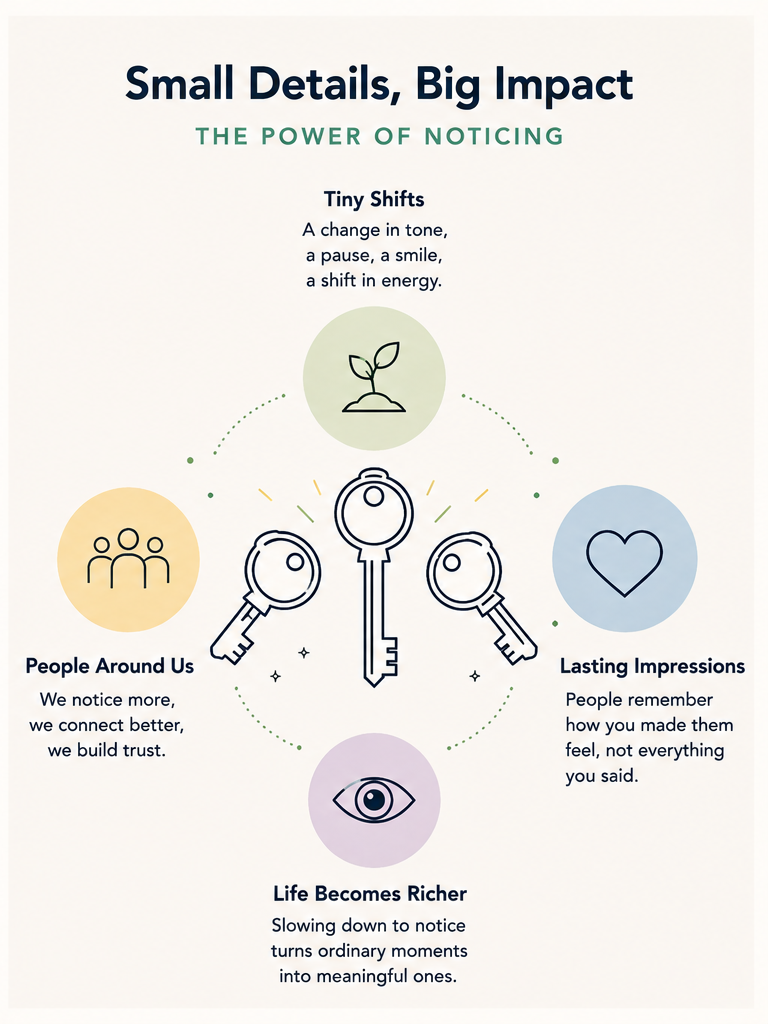
Those moments rarely appear in a project plan, yet they’re often what people remember most.
And I think that’s true outside of work too.
Life becomes richer when we slow down enough.